
A bay window can seem like wasted space if you’re not sure how to use it.
But with a few thoughtful choices, it might just become the coziest spot in the house.
The best way to decorate a bay window is to layer the right window treatments, comfy seating, and a few accents so it feels both useful and inviting.
Whether you’re after a sunny breakfast nook, a reading perch, or sneaky storage, there’s a lot you can do here.
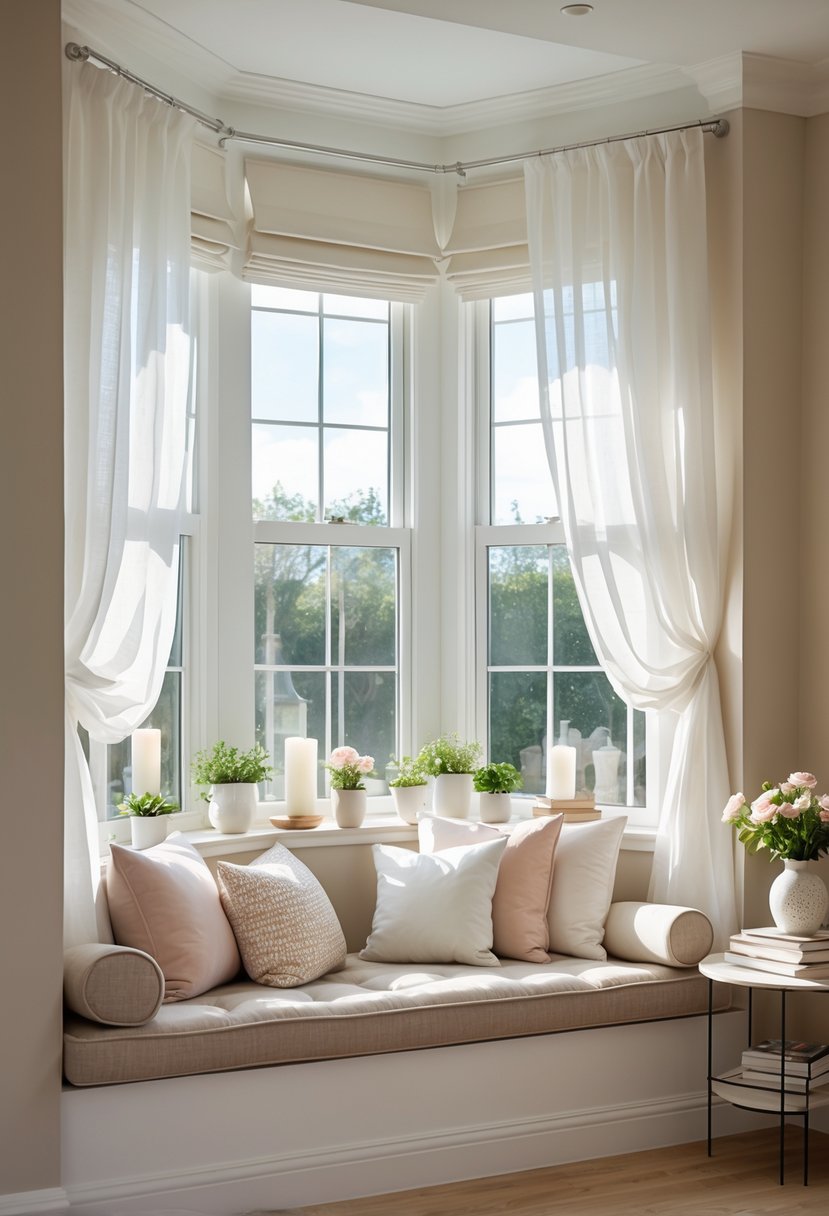
Bay windows bring in tons of light and add a bit of character to any room. With the right curtains or blinds, you can manage brightness without losing that airy vibe.
Add a cushion or a bench, and suddenly you’ve got a place to relax, snack, or even chat with friends.
We’ll look at ways to match style with function, use plants to liven things up, and add little details that make the bay window feel like it belongs.
Understanding Bay Windows
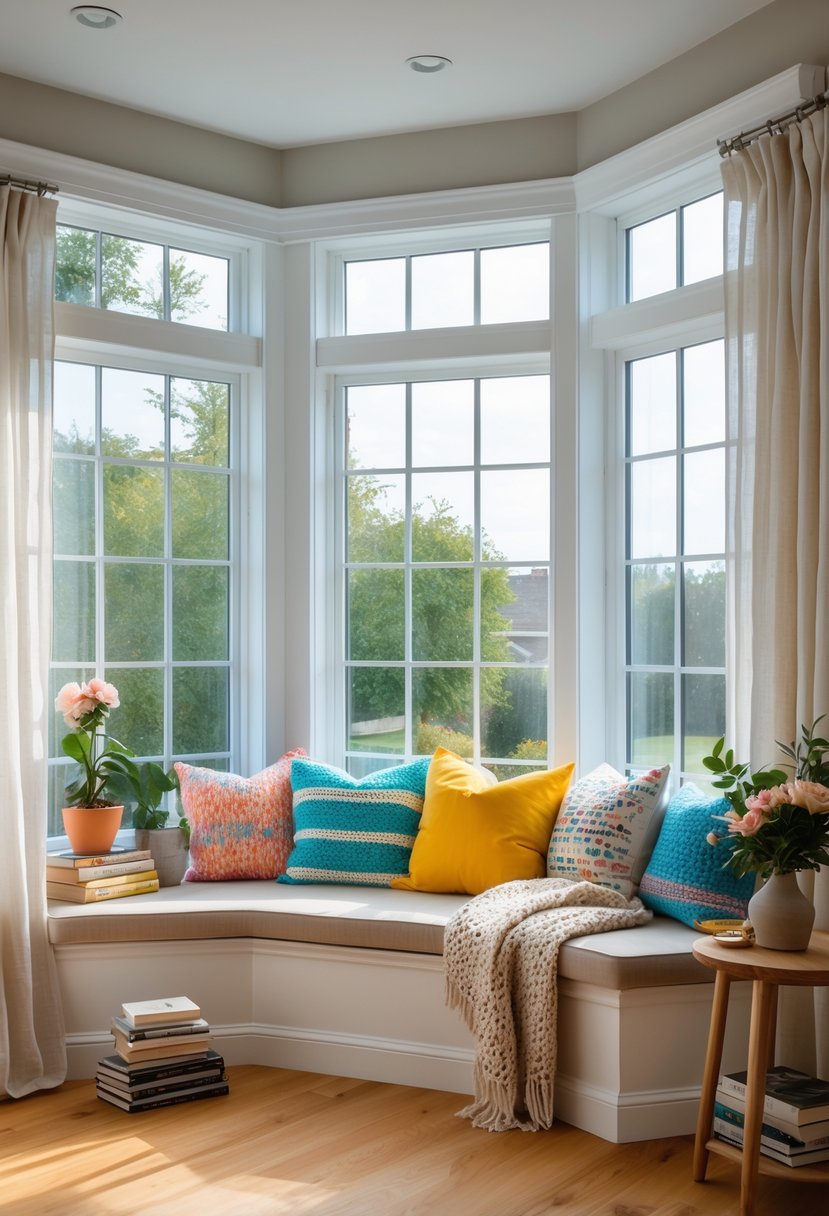
Bay windows totally change the feel of a room. They stick out from the wall, making extra space and letting in more daylight than flat windows ever could.
The shape and placement of the window really influence what you can do with the space around it.
Types of Bay Windows
Not every bay window is the same. The main types are canted, box, and bow.
- Canted bays have a flat front and angled sides — classic in older homes.
- Box bays are square or rectangular, perfect for seating or tucking in storage.
- Bow windows curve out with several panels for a softer, rounded look.
Each shape changes what kind of furniture fits. A bow window loves a curved bench, while a box bay makes sense with a straight sofa or table.
Knowing which style you have helps you plan without fighting the architecture.
Architectural Features and Benefits
Bay windows stand out because they push out from the main wall, creating a little alcove.
That ledge is handy for a seat, storage, or a row of plants. The angled panels often open in different directions, so you get better airflow and a fresher-feeling room.
From outside, they add personality to the house, breaking up boring flat walls. Inside, those angles frame the view and make everything feel a bit more open.
Choosing the Right Window Treatments
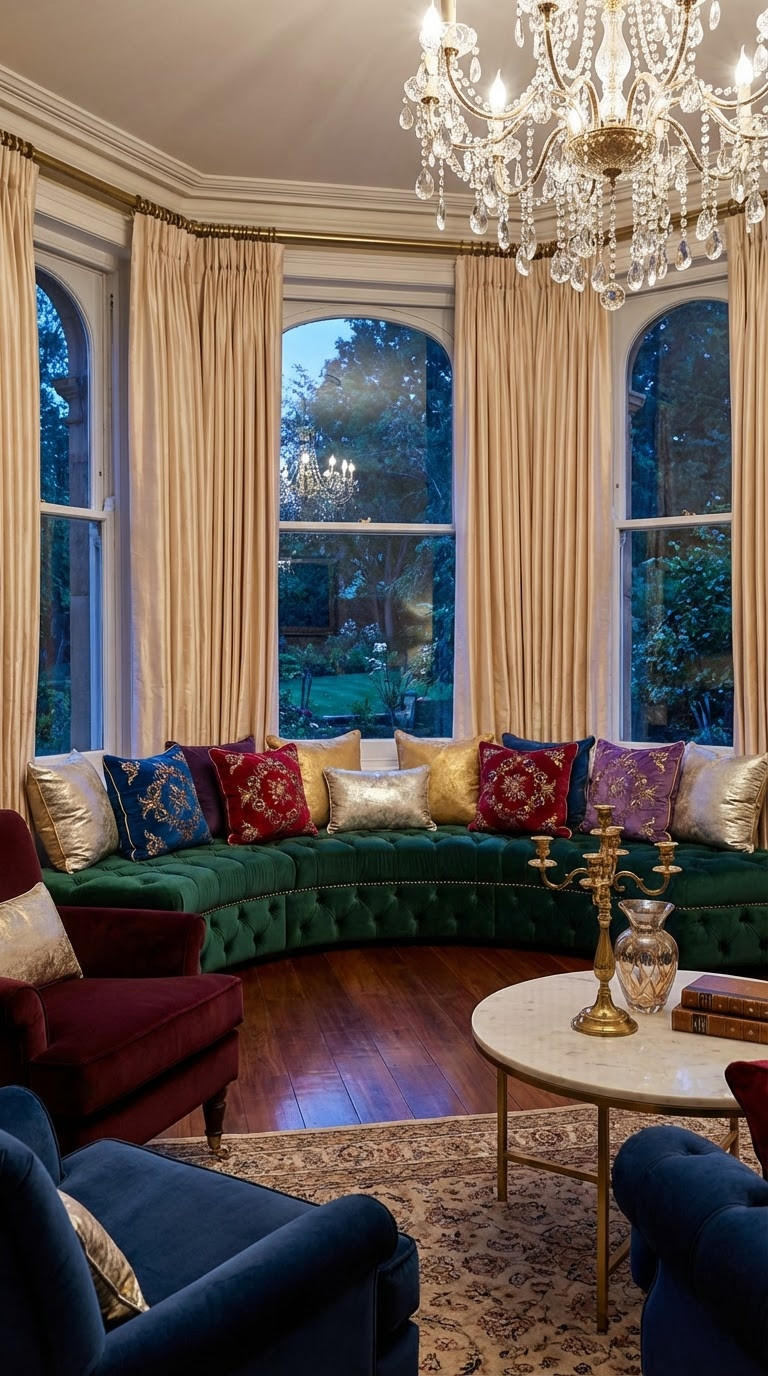
Picking the right window treatments for a bay window is key to balancing light, privacy, and style. What works best depends on how much sunlight you want, your privacy needs, and the overall look you’re after.
Maximizing Natural Light
One of the best things about bay windows is all that light. Since the panels face different ways, sunlight streams in from multiple angles.
If you’re a plant lover or want a reading spot, this is the place to set it up.
To keep that bright feeling, stick with light window treatments. Sheer curtains, Roman shades, or slim blinds do the trick without blocking the view. Mirrors or pale walls nearby can bounce sunlight deeper into the room.
Roman Shades for a Clean Look
Roman shades give bay windows a tidy, tailored feel. They fold up neatly so you can enjoy the view and all the daylight. Lower them for privacy or to block glare.
There are tons of fabric options, from crisp cotton to textured linen. Light-filtering fabrics soften the sun, and blackout liners are great for bedrooms.
You can even get custom sizes for each window panel, which is super helpful for narrow or closely spaced frames.
Pair Roman shades with simple side panels if you want a little extra softness. Since they fit inside the molding, they really show off the shape of the bay.
Café Curtains for Privacy and Style
Café curtains just cover the lower half of a window, making them perfect for kitchens or breakfast nooks. You get privacy where you need it, but still plenty of daylight up top.
Hang them on slim rods or tension rods inside the frame for a simple look. Light-colored or small-patterned fabrics keep things cheerful and open.
You can add a matching valance for a more finished vibe, or just stick with the basics. They’re easy to wash and swap out, which is honestly a lifesaver in busy spots.
Linen Drapes and Sheers
Linen drapes and sheers add a soft, breezy touch to a bay window. Linen looks relaxed but still feels put-together. Sheers filter sunlight and make the space glow. Heavier linen drapes add privacy when you need it.
Mount curtain rods high above the window to make the whole thing look taller. Long panels that barely skim the floor create a nice, clean line.
Neutrals like white, beige, or soft gray usually blend in with everything.
For more depth, layer sheers behind solid linen drapes. This way, you can keep it light during the day and cozy at night. The mix of textures keeps things interesting.
Layering Window Treatments
Layering is a smart move. Think Roman shades with long drapes. You can adjust light all day and get a little more visual depth.
Another idea: sheers with heavier curtains. Sheers stay closed for that soft look, and thicker panels come out when you want privacy.
Layering also helps tie the bay window into the rest of the room. Patterned shades can echo your upholstery, while solid drapes keep things calm. Mixing fabrics or colors adds interest without making the window feel busy.
Bay Window Decorating Ideas for Functionality

A bay window is a chance to turn awkward space into something comfy and useful. With the right setup, you get a spot for lounging, reading, or even sharing a meal.
Installing a Window Seat
A built-in window seat is a classic bay window move. It takes full advantage of the space and gives you extra seating that feels right at home. You can go custom for a perfect fit, or try a premade bench if the dimensions work.
Built-ins can hide storage underneath — drawers or lift-up lids are great for stashing blankets, books, or toys.
Measure carefully. You want at least 18 to 20 inches of depth for comfy sitting and about 18 inches high to match a regular chair.
Tip: A bit of trim or molding around the base helps the seat look like it belongs.
Adding a Window Seat Cushion
No one wants to sit on a hard bench for long. A cushion makes the whole area inviting and way more comfortable.
- Start with firm foam, about 3 to 4 inches thick, cut to fit.
- Durable fabrics like cotton blends or canvas hold up to sunlight and daily use.
- Solid colors keep it simple, but patterns can add a little pop.
- Throw pillows in different sizes and textures make it feel extra cozy and personal.
- A removable, zippered cover is a must — easy to wash and keeps things fresh.
Designing a Breakfast Nook
Bay windows are also kind of made for breakfast nooks. They frame a little dining area with light and a nice view.
- A round or oval table in the center keeps things flowing and avoids awkward corners.
- A built-in bench along the window pairs nicely with chairs on the other side. If you need storage, design the bench with hidden compartments.
- A pendant light above the table defines the space, and some soft cushions and a rug make it feel warm and welcoming.
It’s a relaxed spot for coffee, snacks, or a casual meal. No need for a full dining room!
Built-In Bookshelves and Storage
Adding built-in bookshelves or a storage bench is a smart way to use a bay window. It keeps things tidy and makes the most of every inch.
- A bench with a lift-up seat is perfect for blankets, toys, or whatever you need to stash.
- Shelves on both sides of the bay turn the window into a reading nook and give you space for books, plants, or favorite decor.
- Match the shelves and trim to the window frame for a seamless look, or paint them in a contrasting color if you want the window to pop.
Here’s a quick breakdown of options:
| Feature | Best Use |
|---|---|
| Storage bench | Seating + hidden storage |
| Side bookshelves | Display + organization |
| Open shelves | Plants, books, or decor |
Setting Up a Bistro Table
A bay window can make a great spot for a small dining setup.
- Pop a round or square bistro table in the center and you’ve got a place for quick meals, coffee, or even homework.
- Pick a table that leaves enough space to move around. A round table softens the angles and keeps things flowing.
- Seating can be flexible. Upholstered chairs are comfy, while a built-in banquette makes the most of wall space.
- A pendant light overhead helps the nook feel like its own thing. For privacy, woven shades or Roman blinds keep it simple.
Home Office and Desk Solutions
Need a workspace? A bay window can double as a home office.
- Put a desk in front of the window for natural light and a calming view.
- Choose a narrow desk so it doesn’t block the window trim. A floating or slim writing desk keeps the area open.
- Add low cabinets or drawers along the sides for extra storage without crowding the space.
- Style it with plants, curtains, or shelves for a more finished look.
- A soft rug under the desk helps define the workspace and makes it feel grounded.
Tip: You can also face the desk into the room, using the bay as a backdrop.
Incorporating Plants and Greenery
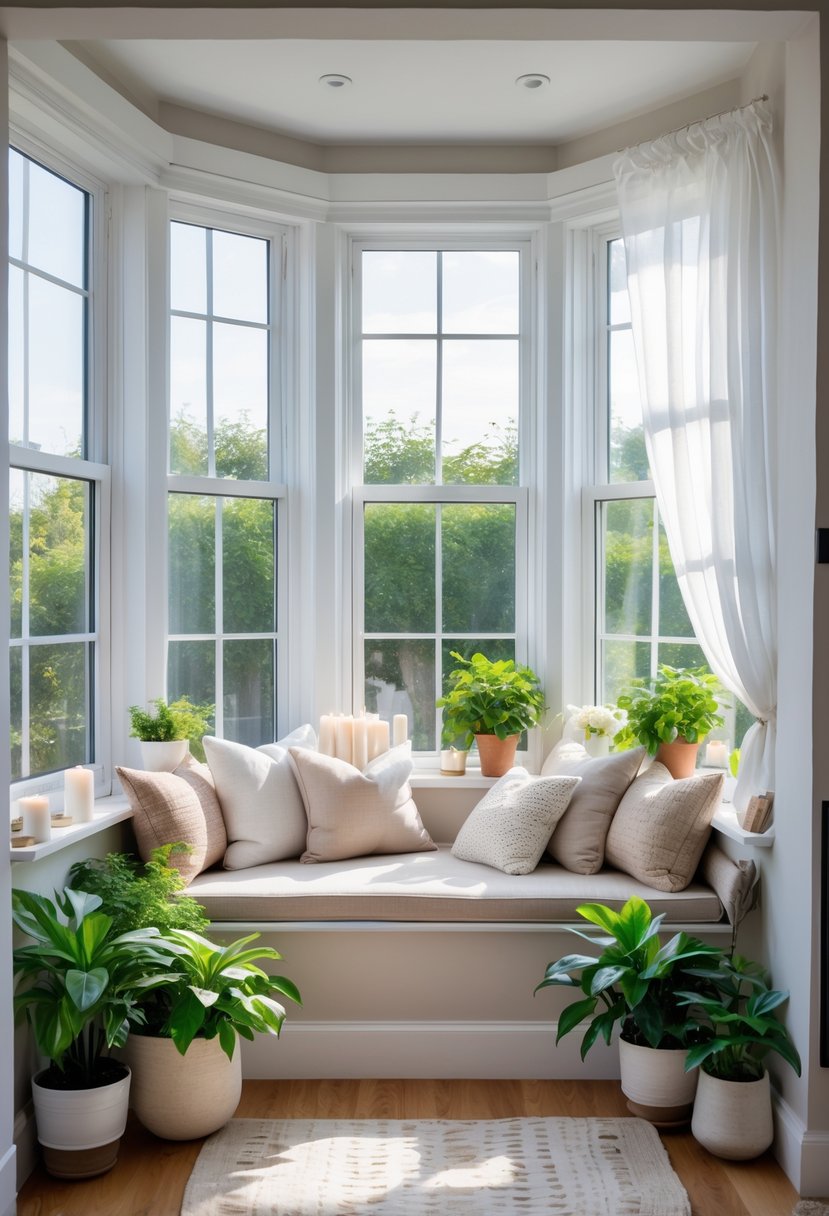
Plants bring color, life, and texture to a bay window. Mixing different types of greenery makes the space feel warm, balanced, and surprisingly easy to care for.
Choosing the Right Plants
The sunlight in your bay window really shapes what you can grow there.
- South-facing windows get bright, direct light for most of the day. This is perfect for sun-loving plants like succulents, cacti, aloe, or even small herb pots such as rosemary or thyme. These plants thrive in strong light.
- North-facing windows receive softer, indirect light. While they may not support high-light plants, they are ideal for ferns, peace lilies, snake plants, or pothos. These varieties tolerate lower light conditions and bring lush greenery without needing intense sun.
- East-facing windows offer gentle morning sun followed by indirect light for the rest of the day. This balanced exposure is great for plants that prefer bright but not harsh light, such as orchids, African violets, calatheas, or parlor palms.
- West-facing windows receive stronger afternoon and early evening sun, which can be warm and intense. Fiddle leaf figs, rubber plants, jade plants, or geraniums do well here. Just be mindful of heat buildup, and rotate plants occasionally for even growth.
Size matters too. If your bay window has a wide sill or built-in seating, you can layer a few medium-sized houseplants at varying heights. On narrow ledges, stick to smaller pots or trailing plants that cascade down without crowding the space.
Finally, mix different leaf shapes, textures, and colors to create visual interest. A thoughtful mix will make your bay window feel full, balanced, and intentionally styled.
If you’re looking for a quick cheat sheet:
| Window Direction / Light Level | Plant Suggestions |
|---|---|
| South-facing (bright, direct sun) | Succulents, cacti, aloe, rosemary, thyme |
| West-facing (strong afternoon sun) | Fiddle leaf fig, rubber plant, jade plant, geranium |
| East-facing (gentle morning sun, bright indirect light) | Orchids, African violets, calatheas, parlor palm |
| North-facing (low, indirect light) | Ferns, peace lily, snake plant, pothos, ZZ plant |
Using Hanging Planters
Hanging planters are a smart way to use that vertical space, especially if the sill’s already packed. They’re also nice if you want to frame the view with some greenery.
Lightweight pots can hang from the ceiling, or you can use wall brackets.
Trailing plants — think ivy, pothos, spider plants — look amazing since they just spill right down. It’s easy to go overboard, but two or three hanging planters is usually plenty.
Hanging them at different heights keeps things interesting and doesn’t block too much light.
Pick planters with decent drainage and make sure you can water them easily. No one wants water stains on the window ledge.
Enhancing Ambiance and Personal Style
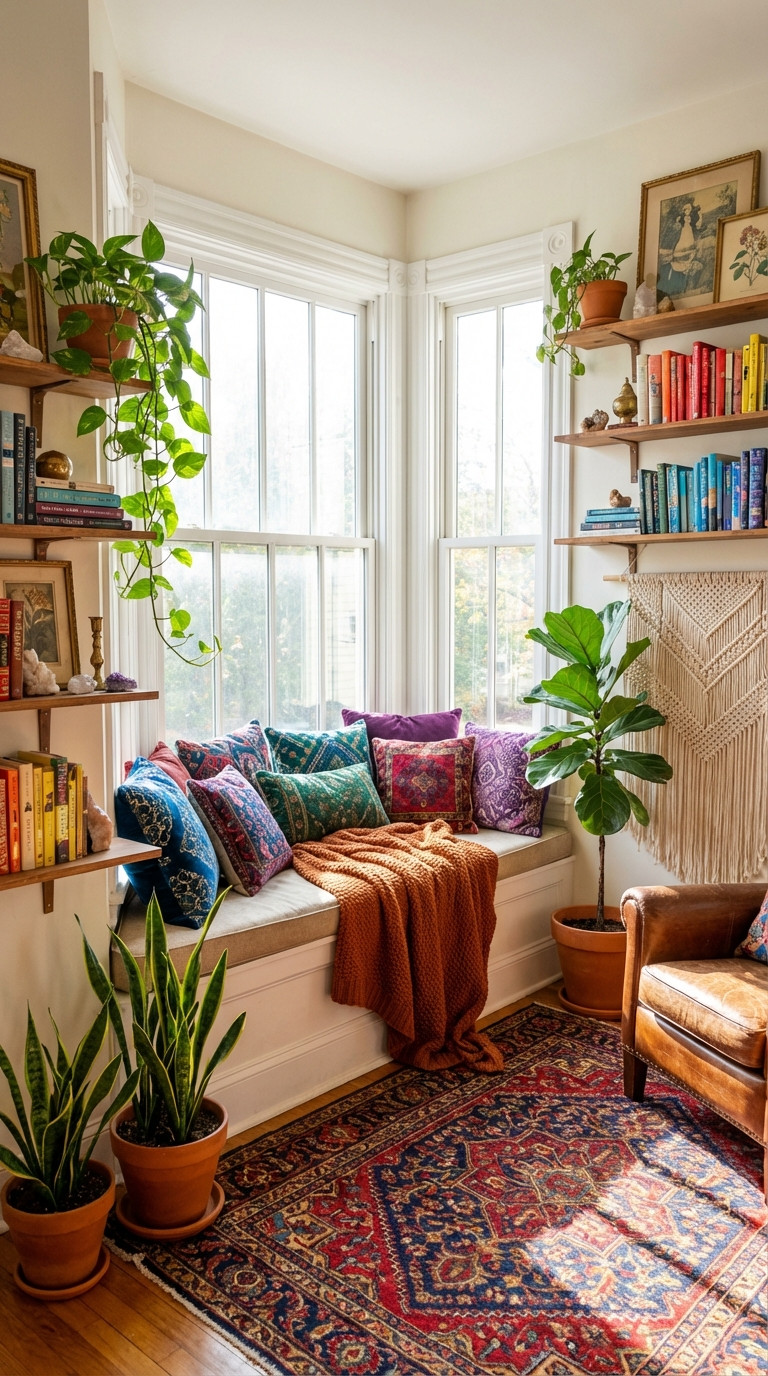
Decorating a bay window should make it feel cozy and personal. Lighting, small accents, and a few seasonal swaps can make the space stand out without messing with all that natural light.
Selecting the Perfect Light Fixture
With all the daylight a bay window gets, the light fixture really just needs to pull its weight after sunset.
Pendant lights, slim chandeliers, or wall sconces on either side add glow without blocking the view. Choosing fixtures with open frames, clear glass, or a compact profile helps maintain natural sightlines while still providing layered, ambient lighting.
Size is important here. A huge chandelier will just take over, but a tiny pendant might disappear into the background. It’s usually best to keep the fixture in proportion with the window’s width.
Dimmable bulbs are a lifesaver. You can go bright for gatherings or dial it down for reading.
Here are quick ideas:
- Pendant lights for a modern vibe
- Wall sconces for soft side lighting
- Slim chandelier if you want a little elegance
Displaying Art and Decorative Accents
Bay windows give you extra wall and surface space, so they’re a nice spot for art and decor.
Hanging a few frames vertically works well without hiding the glass. Keeping the arrangement streamlined and slightly spaced out allows the window to remain the focal point while still adding personality and visual interest.
Small accents reflect sunlight and keep things airy. Maybe a ceramic vase, a marble-topped table, or a set of pale planters.
Lighter finishes usually work better than heavy, dark pieces that soak up the light. Soft woods, white frames, brushed metals, or glass accents help reflect natural light and keep the bay window area feeling open and airy.
Mixing up heights helps too. Pair a taller plant with a short stack of books and you’ve got some visual variety without making it feel crowded.
Seasonal and Themed Decorations
Your bay window can transform with the seasons. It’s honestly one of the most flexible spots in the house.
In winter, a Christmas tree or a few string lights nearby really show off the window’s shape. Spring? Fresh flowers or a burst of greenery bring in color and a little extra energy.
You don’t have to go overboard here. A couple of themed accents — maybe pumpkins in the fall or seashells in summer — add charm without making things feel cluttered.
Keeping decorations simple lets the window’s natural light and structure stay front and center. Sometimes less really is more, right?
If you want easy variety, just rotate a few items through the year:
- Winter: tree, candles, or lanterns
- Spring: fresh cut stems, pastel accents
- Summer: light fabrics, coastal pieces
- Fall: gourds, warm-toned textiles