
Decorating a living room can feel like a lot, but honestly, it doesn’t have to be.
The real trick is making a space that actually feels good to be in — looks nice, sure, but also works for real life.

With the right mix of furniture, lighting, and those little personal touches, any room can become a spot where people want to hang out.
We’re talking about picking the right sofa, finding a rug that fits, layering lighting, and deciding what accessories actually matter.
Every choice changes how the room feels. There’s no single right answer, but a few simple ideas and some expert tips can help keep things fresh.
Planning Your Living Room Design

When it’s time to decorate, it helps to really look at the space, gather ideas that fit your vibe, and set a budget so you don’t go overboard.
Focusing on these steps makes it easier to create a room that actually feels like yours.
Assessing Your Space and Needs
First things first, measure the room. Jot down where the doors, windows, and outlets are.
This helps you figure out what furniture will fit and where the best light comes in. It’s also worth thinking about how you use the space.
Do you mostly watch TV, have friends over, or need room for kids to play? That changes everything about the layout.
A checklist makes life easier:
- Main use of room: TV, reading, entertaining, etc.
- Number of seats needed: Sofa, chairs, sectional.
- Storage needs: Shelves, cabinets, baskets.
- Traffic flow: Paths between doors and seating.
Matching your needs with the room’s layout saves you from buying stuff that just doesn’t work.
Finding Room Inspiration
Looking at living room ideas can spark something. Flip through blogs, scroll Pinterest, or grab a design magazine — just see what catches your eye.
Collect your favorite images in a folder or mood board. You’ll probably spot patterns. Maybe you lean toward neutrals, bold rugs, or clean lines.
Don’t feel like you have to copy a room exactly. Mix and match elements you like with what you already own.
If you’re into that cozy farmhouse look, maybe grab a textured rug and a wooden coffee table, but keep your current sofa.
Just keep it practical. Think about whether the style fits your daily life, not just the pretty photo.
Setting a Decorating Budget
Having a budget keeps things in check. Usually, bigger items like sofas and rugs are worth spending on, since you’ll live with them for a while.
Here’s a simple way to lay it out:
| Item | Save or Splurge | Notes |
|---|---|---|
| Sofa | Splurge | Long-term investment |
| Rug | Splurge | Size and durability |
| Lighting | Save | Affordable options |
| Decor/Accessories | Save | Easy to swap out |
Take a look at what you already have too. Sometimes a lamp or side table from another room can work here.
Repurposing frees up cash for new things that really change the space.
Choosing the Right Living Room Furniture
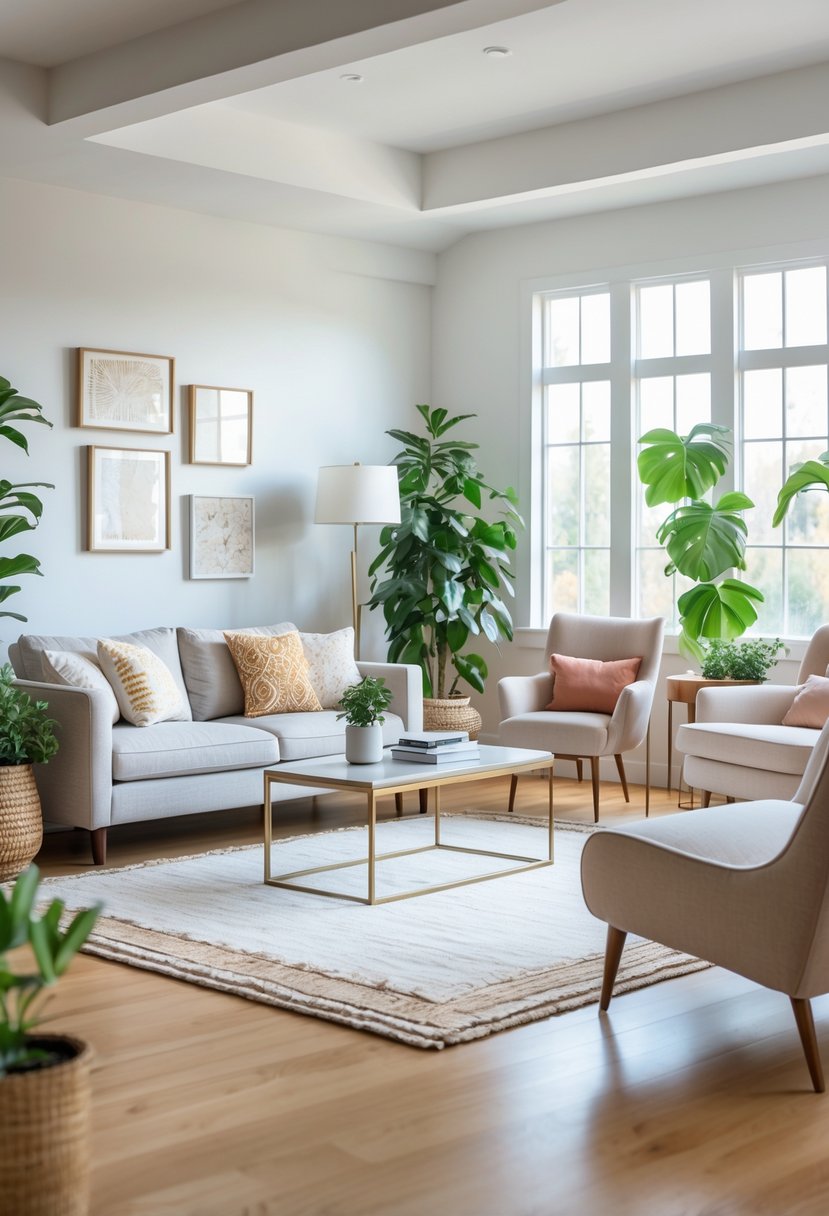
Furniture sets the mood for your living room. Comfort, size, and where you put it all matter way more than you’d think.
Selecting the Perfect Sofa
The sofa’s usually the star of the show, so start there. Think about how you use the space — lounging, hosting, watching TV?
Sectionals are great for bigger rooms or families who need lots of seats. Smaller spaces do better with a regular sofa or loveseat.
Whatever you pick, measure first. Too big and it’ll swallow the room; too small, and it looks lost.
Fabric’s a big deal too. Microfiber or leather can handle a lot, while linen feels cozy but stains easily.
If you’ve got kids or pets, removable covers or darker colors are lifesavers.
Coffee Table Selection Tips
The coffee table pulls everything together.
Aim for a size that’s about two-thirds the length of your sofa. Leave around 18 inches between the table and sofa so you’re not squeezing by.
Shape matters more than you’d think. Rectangular tables are solid with long sofas, but round or oval tables make tight spaces feel less cramped.
If you host a lot, a bigger table with storage underneath is handy for remotes, books, or board games.
Height counts too. A table roughly level with your sofa cushions just feels right.
Materials change the vibe: wood is warm, glass or metal is lighter and modern.
Arranging Living Room Furniture
Once you’ve got the main pieces, how you arrange them changes everything.
Start with the sofa. It anchors the room.Usually, you’ll want it facing a focal point like the TV, fireplace, or a big window.
Add chairs or loveseats across or at an angle to make conversation easy. Try to keep seating within about nine feet so you’re not shouting.
Leave clear walkways — about 30 to 36 inches between big pieces, or at least 18 inches if you’re tight on space.
Side tables and lamps within reach of each seat make the room feel finished and comfy.
Creating a Cozy and Inviting Atmosphere
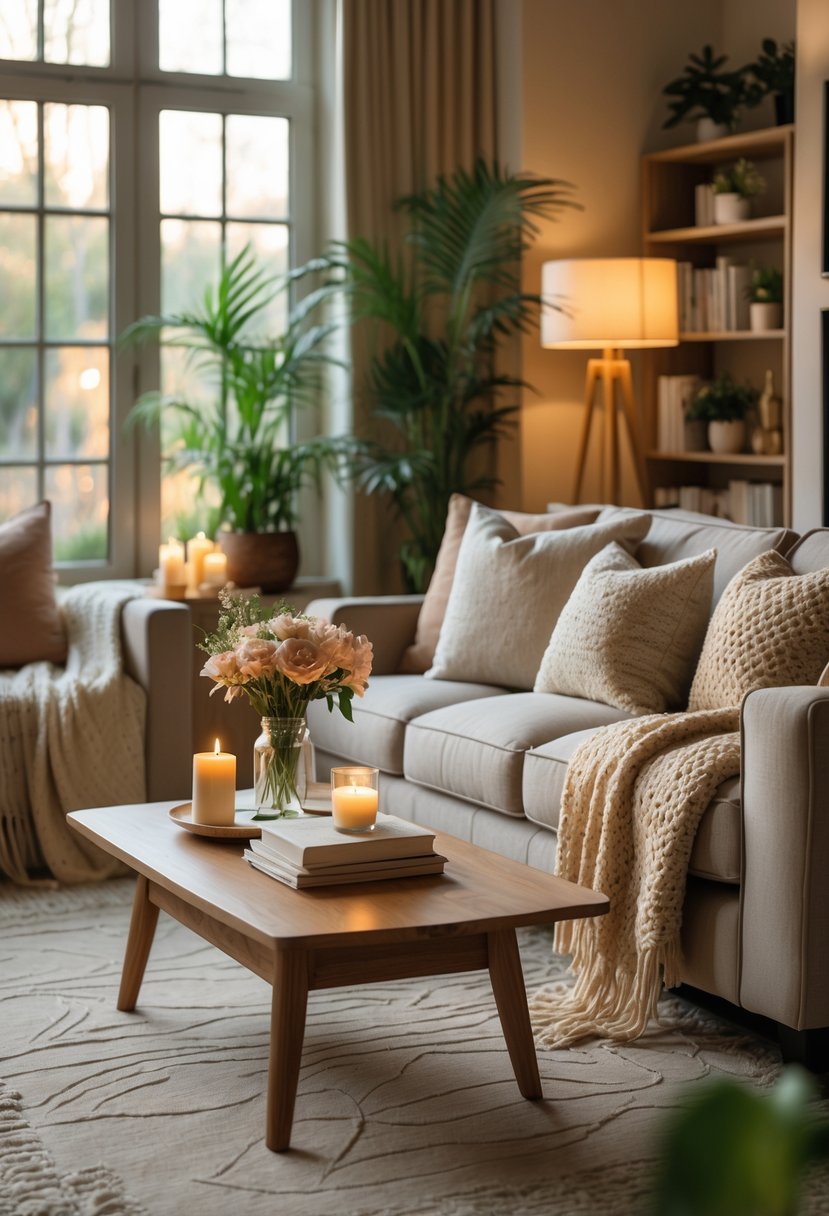
A living room’s at its best when it feels both stylish and comfortable. Focusing on texture, layers, and calming colors goes a long way.
Small details like fabrics, pillows, and neutral tones all work together to make a space feel relaxed.
Layering Textures and Fabrics
Texture is underrated. It keeps a room from feeling flat. Mix velvet, linen, wool, and cotton for instant coziness. Even something as simple as a woven basket or knit pouf can warm things up.
Don’t stop at the furniture. Curtains, rugs, and lampshades add layers too. A soft rug or a chunky knit blanket on a chair makes the place feel lived-in.
Think about it in layers:
- Smooth textures: leather, glass, wood
- Soft textures: velvet, chenille, fleece
- Natural textures: jute, rattan, linen
Combined, they balance things out and make the room feel welcoming, not cluttered.
Throw Pillows and Throws
Throw pillows and blankets are your secret weapons. They add softness, color, and pattern without a big commitment.
A plain couch looks way more inviting with a mix of pillows in different sizes and fabrics.
Mix it up. Pair a velvet pillow with a cotton one for contrast. Throw in a few patterns with your solids to keep things interesting.
Blankets work the same magic. Toss one over an armchair or fold it at the end of the sofa. It looks good and it’s practical.
Having them handy makes the room feel ready for a lazy afternoon.
Incorporating Neutral Colors
Neutrals keep things calm. Beige, cream, gray, and soft browns don’t fight for attention, so the space feels open.
Use neutral tones to show off texture — a beige linen pillow next to a gray wool throw, for example. It adds interest without making the color scheme overwhelming.
Neutrals are flexible too. You can swap in new pillows or a bold rug and the room still works.
Sticking to a neutral base lets you add personality but keeps the vibe relaxed. A neutral sofa is a safe bet if you like changing things up with the seasons.
Lighting Your Living Room Effectively
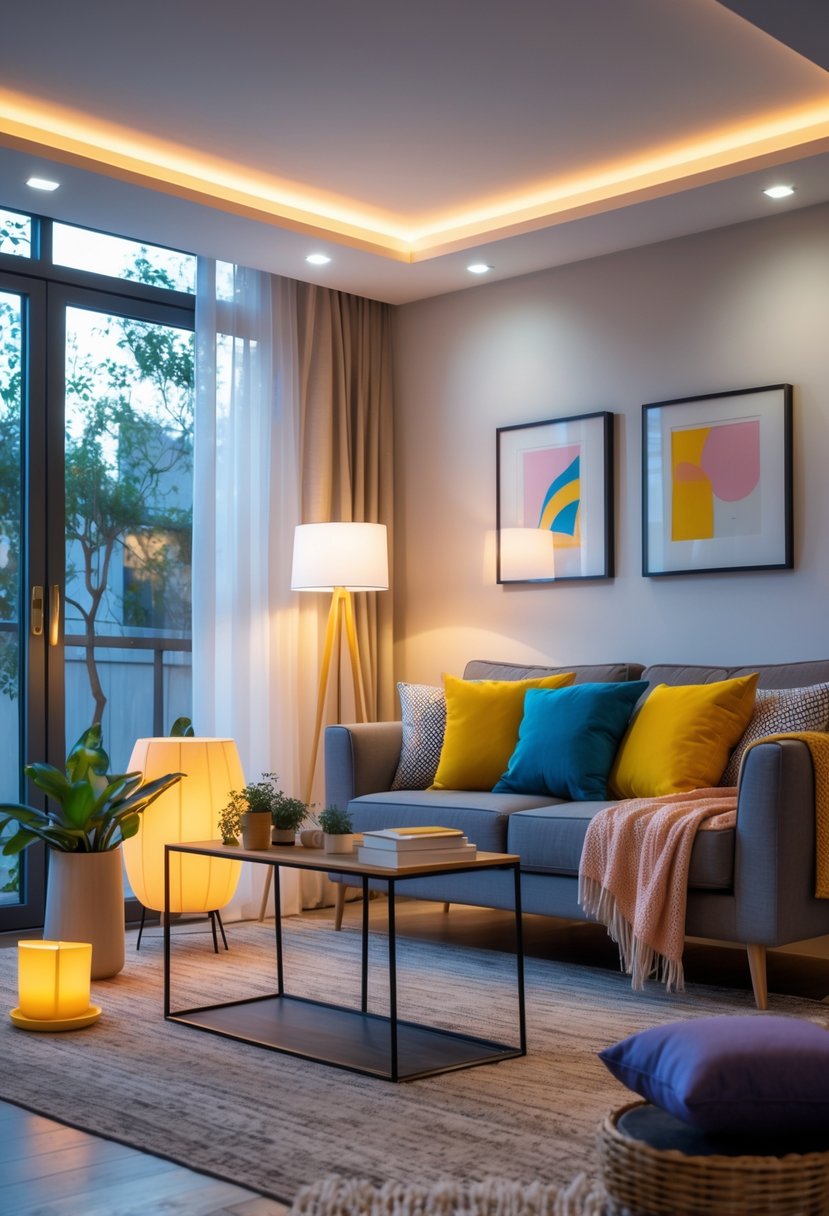
Lighting makes or breaks a living room. The right mix makes it comfortable, practical, and just plain nice to be in.
Layering Light Sources
Don’t just rely on the overhead light. Layer different types — ambient, task, and accent lighting.
Ambient lighting gives you general brightness. Task lighting helps for reading or hobbies. Accent lighting highlights cool features or decor.
A good setup might be a ceiling fixture for overall light, a floor lamp by the sofa, and a couple of sconces in the corners.
Dimmers are a game-changer — you can tweak the mood for any time of day.
Mixing light sources cuts down on shadows and glare, making the space easier on the eyes.
Choosing Floor Lamps and Sconces
Floor lamps and sconces add style and function without much effort.
A floor lamp next to a chair or sofa is perfect for reading. Tall lamps that shine upward brighten things up, while shaded lamps give a softer feel.
Wall sconces save space and are great for smaller rooms. Put them near artwork or shelves, or install a pair on each side of a sofa or fireplace for balance.
Mixing different light heights keeps things interesting and helps the eye travel around the room.
Highlighting Decor With Lighting
Lighting isn’t just about making things bright; it’s also about showing off what you love!
Spotlights, uplights, or angled recessed lights can draw attention to artwork, plants, or textured walls. A 30° angle toward the wall usually works best to avoid harsh glare.
For shelves, small LED strips or puck lights make objects pop. Plants or sculptures look dramatic with a floor uplight tucked behind.
Accent lighting adds depth and guides the eye, making the room feel more dynamic without adding extra stuff.
Personalizing With Decor and Accessories
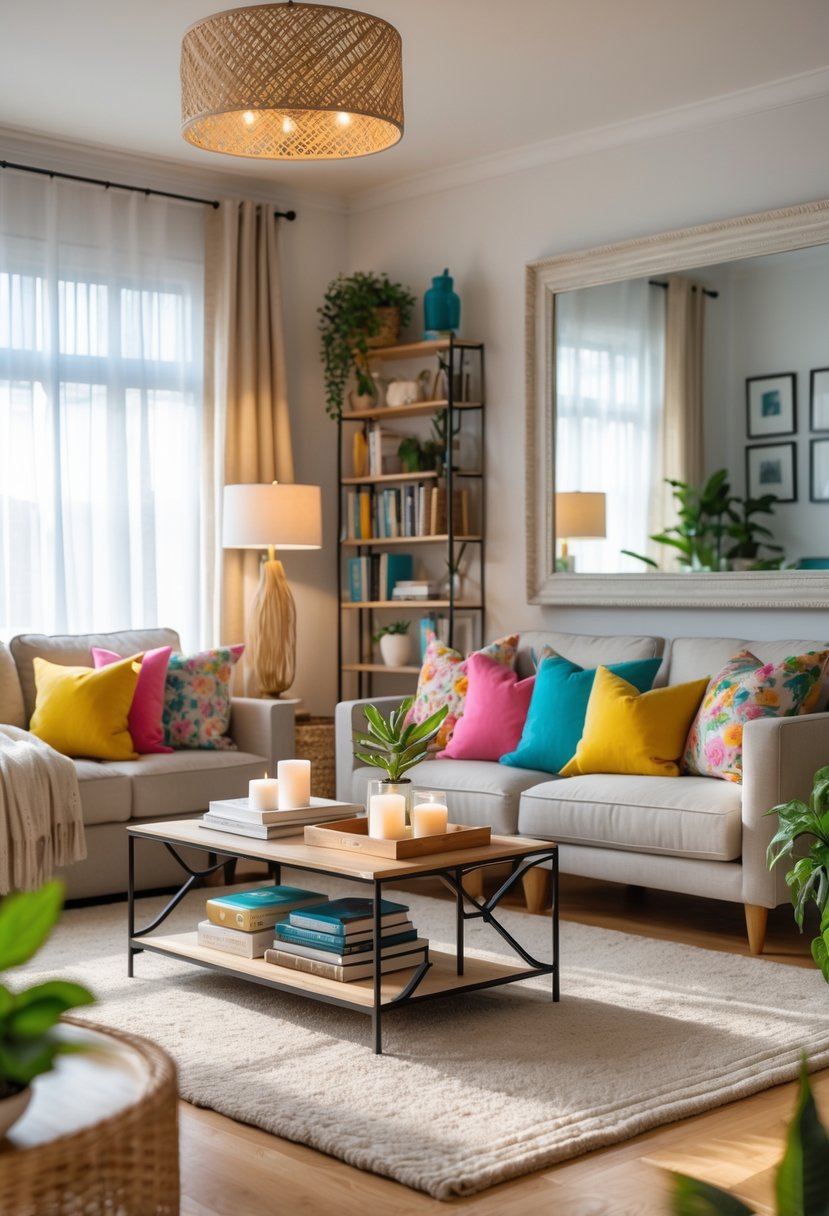
It’s the little things that make a living room feel like home. Artwork, wall displays, and quirky objects add personality and warmth.
Displaying Artwork and Wall Art
Hanging art is one of the simplest ways to bring color and style in.
A big canvas above the sofa can anchor the room, while smaller prints work great in pairs or clusters.
Scale matters — a tiny picture on a huge wall looks lost, but oversized art can overwhelm a small space.
Here are a few pointers:
- Match colors in the art to your decor.
- Use frames that play nicely with your furniture.
- Hang pieces at eye level for balance.
Mixing different types — photos, paintings, prints — keeps things from feeling too matchy-matchy.
Curating a Gallery Wall
A gallery wall lets you show off a bunch of pieces at once, and honestly, it feels creative and personal.
Planning the layout is kind of essential before you start hammering away.
Try arranging everything on the floor first, then snap a photo to use as a guide when you hang them up.
Here are some easy layout ideas:
- Grid style: neat and symmetrical.
- Organic mix: a loose jumble of different sizes.
- Shelf display: frames leaning on a picture ledge — super casual.
No need to stick with just art. Small mirrors, wall sculptures, even framed fabric swatches can add texture and make it feel more layered.
Adding Sculptural Vases and Unique Accents
Accessories like sculptural vases, bowls, or quirky little statues add some shape and dimension to your space.
Unlike flat art, these pieces bring interest to shelves, mantels, or coffee tables.
A tall ceramic vase with branches? Instantly draws the eye up. A smaller glass vase with fresh flowers brings a bit of softness.
Mixing materials — stone, wood, metal — keeps things from feeling too one-note.
Grouping matters too. A single vase can look elegant, but a couple of objects at different heights feels more dynamic.
These accents don’t just fill space; they also really show off your style.
Expert Decorating Ideas and Trends
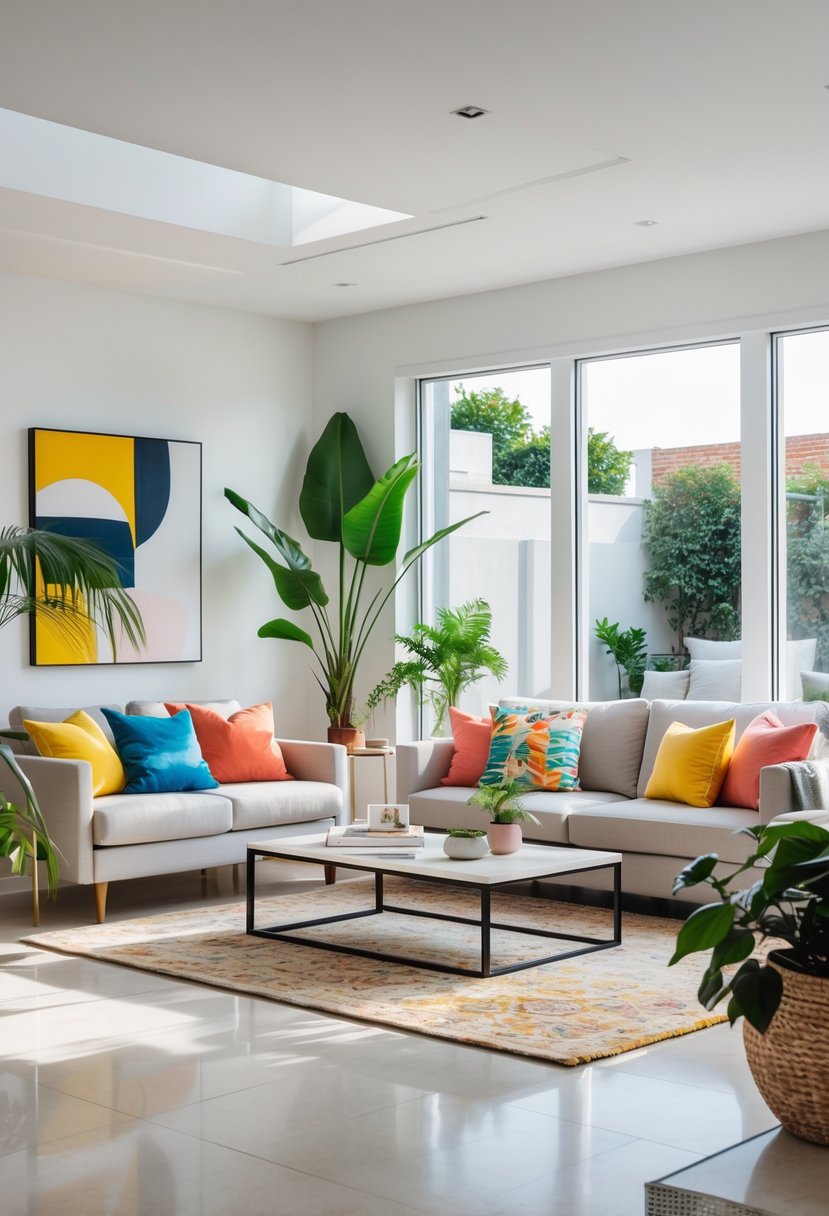
When decorating a living room, it’s smart to peek at what designers suggest, what’s trending, and the mistakes that trip people up. Pulling from all that gives you ideas but keeps things personal.
Current Decorating Ideas to Try
Right now, earthy tones — beige, brown, green — are everywhere. They make a room feel calm and grounded.
Natural textures like wood, stone, or linen fit right in with those colors. A wooden coffee table or linen curtains can cozy up a space fast.
Curved furniture is having a moment. Sofas with rounded arms or circular side tables break up all the sharp lines and make things feel softer.
If you want flexibility, modular furniture is worth a look. Sectionals you can rearrange, ottomans with storage. Super practical!
Maximalism is catching on for anyone who loves bold style. It’s about layering patterns, colors, and art. The trick is to keep it balanced with some solid, neutral pieces.
Avoiding Common Living Room Mistakes
One thing that trips people up is pushing all the furniture against the walls. Designers often suggest floating a sofa a few feet from the wall instead.
This creates a better flow and actually helps conversation areas feel more inviting. It’s surprising how much difference a little space can make.
Lighting is another area where things go sideways. If you only rely on overhead lights, the whole room ends up feeling flat or cold.
Mixing in some floor lamps, table lamps, or even adding dimmers can totally shift the mood and make things cozier.
Clutter sneaks up fast too. Filling every surface with little decor pieces just makes the space feel cramped. It’s usually better to pick a few meaningful things and let them breathe.
Scale matters more than people think. A tiny rug under a giant sofa? It just looks off.
Choosing rugs and furniture that balance out other elements makes everything feel more pulled together, even if it’s not perfect.