
Small spaces can feel cozy, but they can also get a little claustrophobic if we don’t set them up right.
The good news? You don’t have to knock down walls or drop a fortune just to make a room feel more open.
The simplest way to make a room look bigger is by using light colors, smart furniture choices, and layouts that create flow.

There are a bunch of tricks that play with color, light, and placement to shift how a room feels.
Lighter paint can brighten things up, mirrors bounce light and views, and choosing furniture that’s the right size frees up precious floor space.
Want more tips?
Learn how to make a room look bigger using these interior design tricks that truly make a difference.
Choose the Right Paint Colors

Wall color totally changes how big or small a room feels. Light and neutral shades open things up, lighter trim makes walls seem taller and wider, and stripes can stretch a space in the right direction.
Use Light and Neutral Shades
Light colors reflect more light, so the room feels airy instead of boxed in. These tones don’t pull focus, so your eye flows across the space without getting stuck.
Neutrals like taupe or cream kind of fade into the background, letting your furniture and decor pop without making the space look busy.
Soft whites, pale grays, and light beige are easy picks that work almost anywhere.
Want a little color? Pastel blues or greens can sneak in some personality while still keeping things bright.
Quick list of go-to shades:
- Off-white: clean, simple
- Light gray: modern, soft
- Beige or taupe: warm, flexible
- Pale blue/green: calm, subtle
Paint Trim and Moldings Lighter
Painting trim and moldings lighter than the walls stretches the space visually. The contrast tricks your eyes, making the walls look like they extend farther.
Say your walls are a soft gray. Try pure white trim for crisp edges and a more open feel.
Semi-gloss or satin finishes on trim reflect light, adding brightness without overpowering the walls.
Where to use this trick:
- Baseboards
- Window frames
- Door casings
- Crown molding
Lighter details add depth and make the whole room feel less boxed in.
Add Feature Stripes for Illusion
Stripes guide the eye and tweak how we see a room’s shape. Vertical stripes make ceilings look higher, while horizontal ones can stretch a wall wider.
No need for loud, high-contrast stripes. Subtle combos like beige and white or soft gray and cream work just fine. Wide stripes feel calm, thin ones add a little energy.
Try stripes in these areas:
- Behind the bed or sofa
- On one accent wall in a hallway
- In small bathrooms for a sense of height
Used carefully, stripes can reshape a room’s vibe without any renovations.
Maximize Natural and Artificial Light
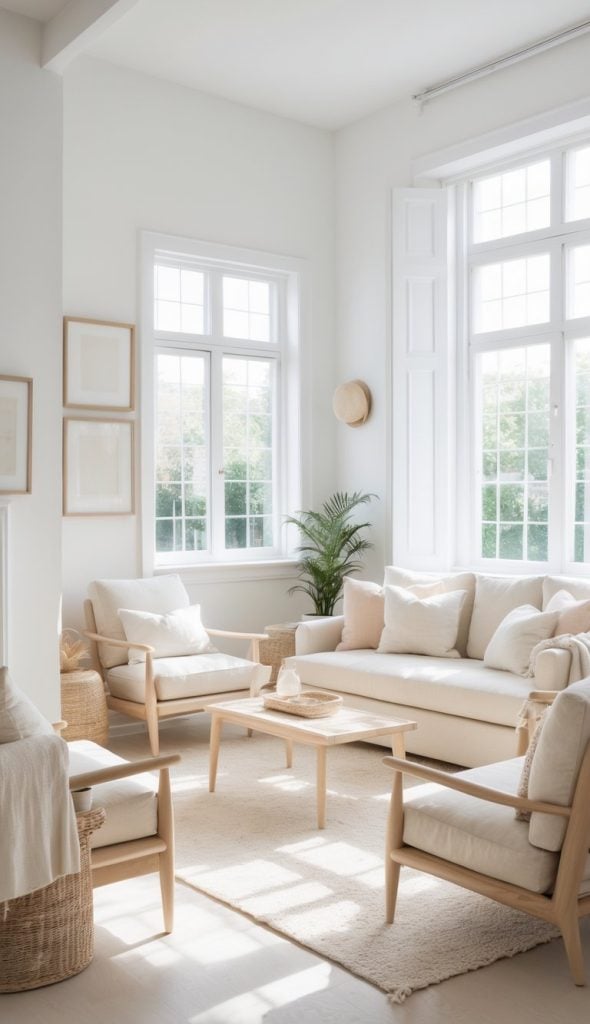
Light has a huge impact on how big or small a room feels. Letting in more daylight, reflecting it with mirrors, and filling in darker spots with smart lighting can really open up a space.
Let in More Natural Light
Natural light instantly freshens up a room. Heavy curtains or chunky blinds block sunlight, so swapping them for sheer curtains or light-colored shades helps the light pour in.
Keep windows clear of furniture. No couch or shelf in the way. A clean window lets in more light and makes the whole place feel brighter.
Even little tweaks help:
- Paint around window frames in light colors.
- Clean window glass for crisp, clear light.
- Use reflective finishes nearby to bounce brightness deeper in.
Letting in as much daylight as possible (without sacrificing privacy) is the goal.
Use Mirrors To Reflect Light
Mirrors are classic for making a space feel bigger.
Placing one across from a window bounces sunlight around, instantly brightening the room.
You don’t need giant mirrors. Just a few mid-sized ones on different walls can reflect both natural and artificial light.
Even mirrored furniture or glossy cabinets help.
Here are smart mirror spots:
- Opposite windows
- Behind lamps to double the glow
- In narrow hallways for added depth
Reflective surfaces make every bit of light work harder.
Brighten Dark Corners with Lighting
Dark corners shrink a room, drawing attention to its limits. Layered lighting spreads brightness evenly and kills off those heavy shadows.
- Try floor lamps, wall sconces, or small table lamps in dim spots.
- Recessed lighting covers more area, while pendant lights pull your eyes up and highlight vertical space.
- Mix up warm and cool bulbs depending on how you use the room. Cooler light feels more open and airy; warmer tones add comfort without closing things in.
Targeting dark corners helps the space look balanced and inviting.
Optimize Room Layout and Flow

How you set up a room can totally shift how open or cramped it feels. Flooring and furniture placement can either chop up the space or make it feel larger.
Opt for Slimmer Furniture
Bulky furniture eats up floor space and makes a room feel heavy. Slimmer pieces with clean lines give the room some breathing room. A sofa with narrow arms or chairs with visible legs look lighter than oversized, boxy ones.
Multi-purpose furniture — like a storage ottoman or coffee table with shelves — keeps things tidy without hogging space.
Transparent pieces, like glass tables or acrylic chairs, almost disappear and help the room feel open.
Picking pieces that fit the room’s scale makes it easier to move around and keeps things balanced.
Leave Space Around Furniture
Pushing all the furniture against the wall might seem like it saves space, but it can actually make things feel tighter.
Leaving a few inches between the wall and your furniture gives the illusion of depth.
Don’t fill every corner. Open corners let the eye travel across the room more easily. Even tiny gaps can change how large the space feels.
Think about traffic flow. If you can walk through the room without zig-zagging, it feels more open and less cluttered.
Mount TV and Shelves on Walls
Using wall space instead of floor space is a game-changer. Mounting the TV on the wall frees up the area a big TV stand would take.
Wall-mounted shelves are great too. They hold books, plants, or decor without crowding the floor. Floating shelves keep things light and uncluttered.
If space is super tight, you can even mount nightstands or desks. Lifting storage off the ground keeps the floor visible, which always makes a room look bigger.
Use Consistent Flooring
Using the same flooring across connected rooms means your eyes don’t stop at every doorway.
It creates one continuous surface — suddenly, everything feels bigger.
Light-colored flooring is especially good since it reflects more light. Pale wood, light laminate, or neutral tile can all help brighten a room and add to the sense of openness.
If you’ve got different floors in adjoining rooms, a big neutral area rug can tie them together. The idea is to avoid visual breaks so the space feels like one big area, not a bunch of tiny ones.
Creative Use of Decor and Accessories
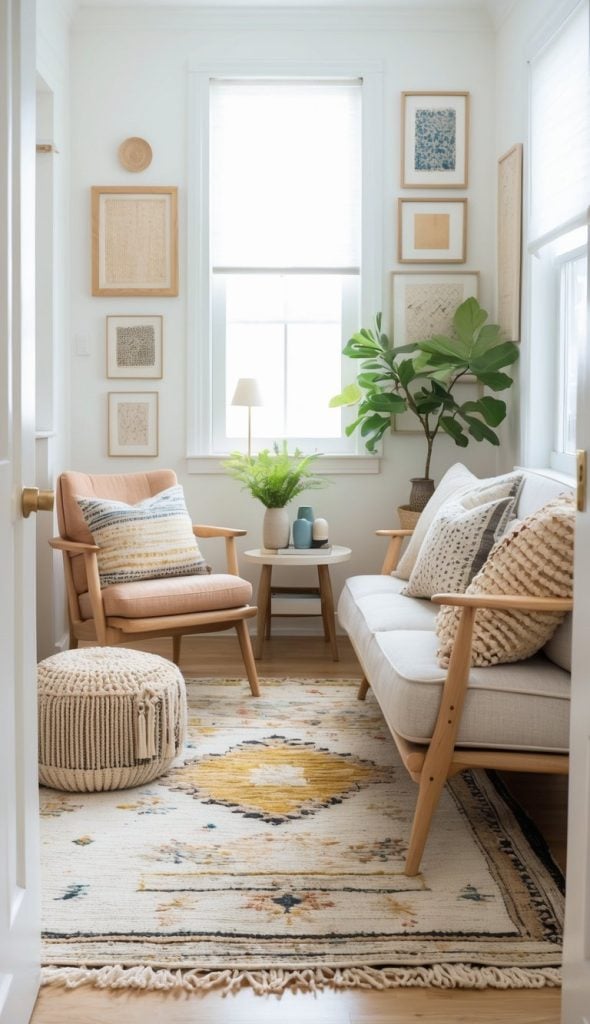
Small decor changes can really shift how open a room feels. Color, height, and window coverings can either crowd a space or keep it feeling light.
Add Pops of Color Strategically
You don’t have to avoid color in a small room, but it’s best to use it thoughtfully.
Light, neutral walls set a roomy backdrop, while small bursts of color add personality without shrinking the space.
One easy trick: keep main furniture and walls soft, then use pillows, throws, or art for brighter pops. The room stays open but still has some interest.
If you’re feeling bold, an accent wall in a single color can work. Just keep the other walls light so the space doesn’t close in.
Patterns can help too, in moderation. A striped rug or a single patterned chair makes a statement without overwhelming the room.
Incorporate Vertical Elements
If space is tight, guide the eye upward. Vertical decor makes ceilings feel taller and gives the room more dimension.
Tall bookshelves, floor-to-ceiling curtains, or a narrow standing lamp all add height without hogging floor space. Even hanging art a little higher can make walls look longer.
Vertical lines in design work too:
- Striped wallpaper with thin, vertical lines
- Tall plants like fiddle leaf figs or snake plants
- Wall-mounted storage that stacks up instead of out
These touches create balance and keep the room from feeling too flat. Sometimes, just a little height goes a long way.
Choose Minimalist Window Treatments
Windows have a huge impact on how big a room feels. Heavy drapes or layered curtains just weigh everything down.
Simpler options like sheer curtains, roller shades, or slim blinds let in more light and keep things feeling open. They give you privacy without shutting out the sun.
If you’re set on curtains, try mounting the rod a little higher and wider than the window frame. It’s a small trick, but it makes the window seem bigger.
Matching curtain color to the wall helps too. The line between wall and fabric almost disappears, so the room feels less chopped up.
Honestly, keeping window treatments light and minimal lets the windows do their thing, making the space feel more open.
Declutter and Maximize Storage
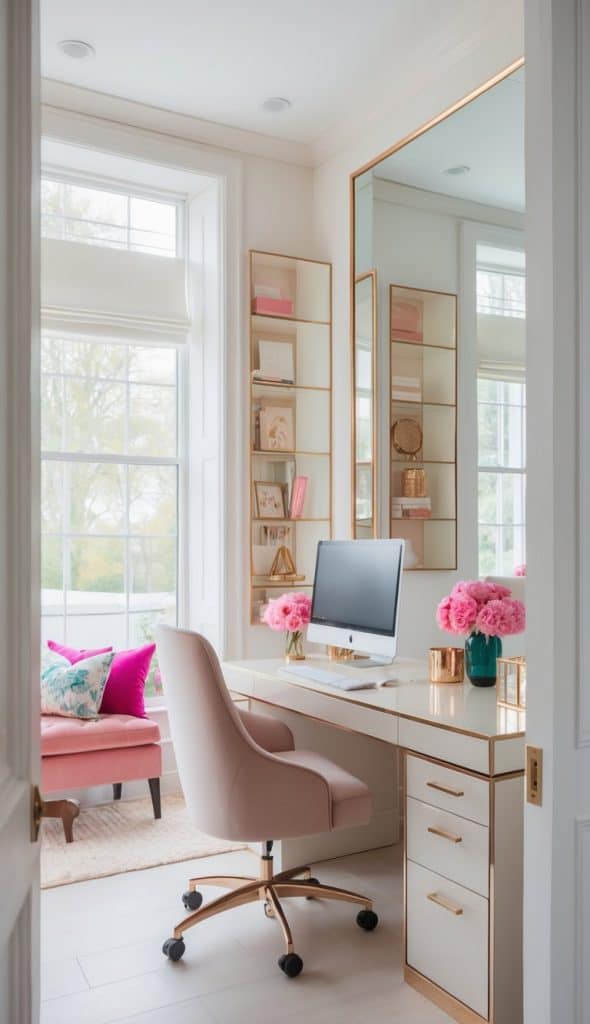
A small room always feels bigger when there’s less clutter. Cutting down on random stuff and using smart storage keeps things neat and airy.
Clear surfaces and tucked-away items make the whole space feel lighter.
Embrace Hidden Storage Solutions
When space is tight, furniture needs to earn its keep.
Furniture with drawers underneath or lift-up frames are lifesavers for hiding clothes, linens, or shoes.
Ottomans with hidden compartments are great for stashing blankets or board games. Plus, they double as extra seating, which is always handy.
Vertical space is easy to forget about, but it’s so useful.
Wall-mounted shelves or cabinets keep the floor clear and still give you a spot for books or décor.
Hooks or hanging racks on doors are a sneaky way to store bags, scarves, or jackets without crowding your closet.
For all the little stuff, baskets or boxes that slide under furniture keep things organized but out of sight.
And honestly, furniture with exposed legs just makes the room feel more open, even if there’s storage underneath.
Keep Surfaces Clear
Flat surfaces always seem to attract clutter. Before you know it, the room feels smaller, maybe even a little chaotic.
Try sticking to just a couple of essentials on each surface. A lamp, your clock, or maybe one small décor piece is usually enough.
Grouping things helps too. Put a candle, a book, and a plant on a tray, and suddenly it looks intentional, not random.
It also makes a difference to give everything a “home.” Keys in a bowl, papers tucked in a drawer, cords hidden in a box.
Setting up these little systems keeps surfaces clear, and the room just breathes easier.