
Decorating a small bedroom can feel tricky, but it doesn’t have to be overwhelming.
The key is to use smart design choices that make the most of the space while still keeping it comfortable and stylish.
With the right approach, even the tiniest room can become a spot that’s practical and inviting. It’s not magic, but it can feel a bit like it when you see the difference.
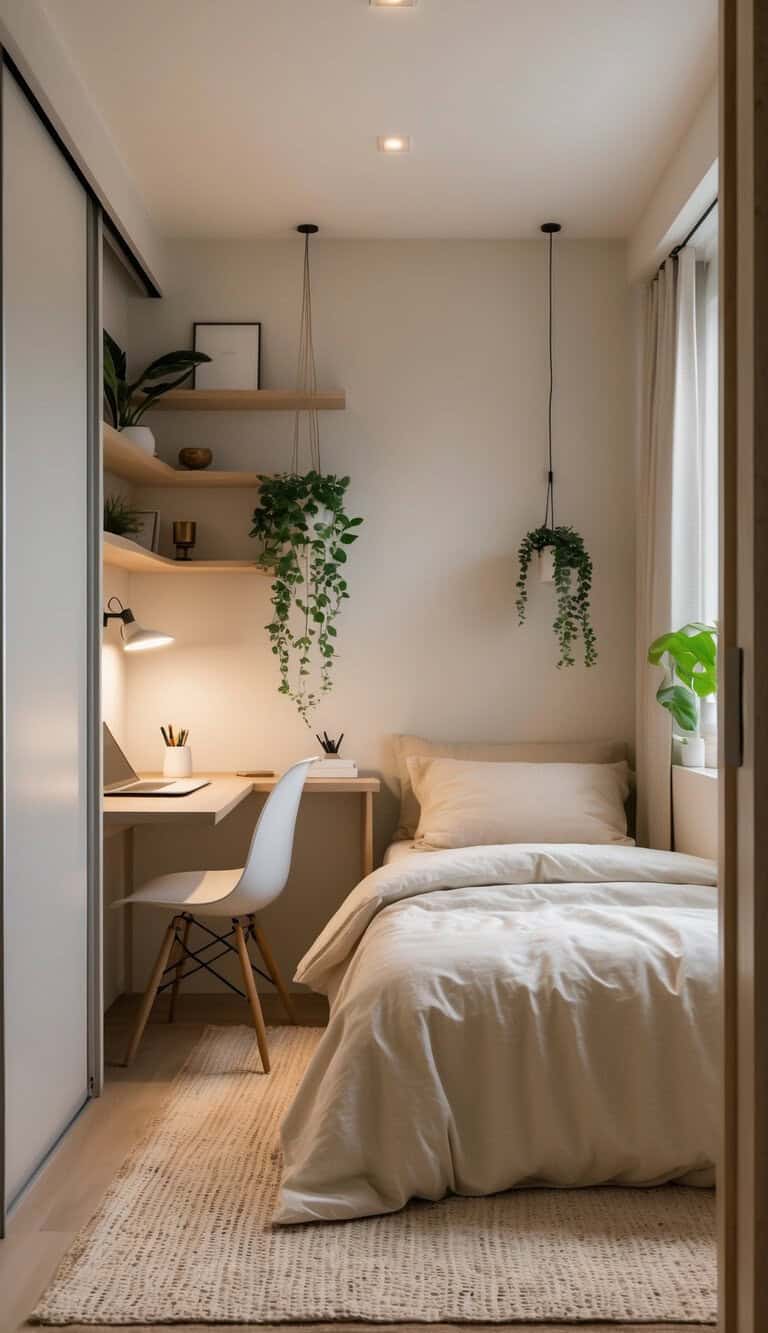
Start by figuring out what you’re working with: measuring, noticing the light, and deciding what really matters.
There are actually plenty of clever storage tricks and lighting ideas that make a small bedroom feel much bigger.
Ready to reimagine your space?
Let’s explore simple, inspiring ways to make your small bedroom shine.
Assessing Your Small Bedroom Space

Before adding furniture or picking colors, it’s worth taking a good look at the space itself. Measuring, noticing the light, and making a list of priorities will help you avoid wasted effort later on.
Measuring and Planning the Layout
Grab a tape measure and jot down the exact dimensions of the room. Measure wall lengths, ceiling height, and window placement.
Even a few inches can change how furniture fits. It’s surprising how tight things can get!
Sketching a simple floor plan — on paper or with a free online planner — lets you test out where the bed, dresser, or desk could go before wrestling with heavy furniture.
Think about how you’ll move through the space. Can you open drawers without bumping into the bed? Is there enough clearance to walk around?
A clear path makes the room feel bigger and more comfortable.
Here’s a quick checklist:
- Bed placement: against a wall or under a window?
- Storage zones: closet, dresser, or under-bed drawers.
- Open space: at least one clear walking path.
Identifying Natural Light Sources
Light changes everything in a small bedroom.
Notice where the windows are, how much daylight comes in, and which way the room faces.
South-facing rooms usually get more warmth and brightness, while north-facing ones might feel cooler and dimmer.
East-facing rooms get gentle morning light that fades by afternoon, and west-facing rooms receive strong afternoon and evening sunlight.
If natural light is limited, here are useful tips:
- Use lighter paint colors to reflect light around.
- Add mirrors opposite or beside windows to bounce daylight deeper into the room.
- Try sheer or linen curtains that diffuse light instead of blocking it.
On the flip side, if the sun blasts in every afternoon, do the following:
- Consider blackout curtains or solar shades to manage heat and brightness.
- Choose cooler color palettes or breathable fabrics to balance warmth.
- Don’t block windows with tall furniture. Let the light flow in! Keeping windows clear can really open up the space.
Setting Your Priorities
Every small bedroom has its limits. It helps to decide what’s most important: maybe a bigger bed, more storage, a desk, or just open floor space.
Make a short list of “must-haves” and “nice-to-haves.” Here’s an example:
- Must-have: queen bed, closet storage
- Nice-to-have: reading chair, decorative shelving
When you know your priorities, it’s easier to pick furniture that does double duty. A bed with drawers might replace a big dresser.
A fold-down desk can offer workspace without eating up floor space. By focusing on what we actually use, we keep things practical and comfortable.
Choosing a Minimalist Design Approach

When it comes to decorating a small bedroom, keeping things simple really helps.
Minimalism means clean lines, a few well-chosen colors, and only the furniture we truly need. It’s not about being cold or boring but about making the room look more open.
Benefits of Minimalist Style in Small Bedrooms
Minimalist design is a lifesaver for small spaces.
- Reduces clutter: Fewer items mean less visual chaos and more breathing room. Every piece has a purpose, helping the space feel organized and peaceful.
- Maximizes space: With only the essentials, you can make the most of every inch — from under-bed storage to floating shelves that free up floor space.
- Easier upkeep: Less stuff means less to clean, dust, or rearrange. Maintenance becomes quick and stress-free.
- Timeless flexibility: A simple base of neutral tones, clean lines, and natural textures works year-round. You can easily change the look by swapping out accent pieces like pillows, throws, or wall art — no major redecorating required.
- Creates calm: The minimalist approach naturally promotes a sense of relaxation and mindfulness, making it easier to unwind in your bedroom.
Incorporating Clean Lines and Simple Color Palettes
The trick is to use shapes and colors that don’t overwhelm the eye.
Go for furniture with straight edges: a basic bed frame, a tidy nightstand.
Skip heavy ornamentation. It just weighs things down and makes spaces feel cramped and overwhelming.
Stick to neutral colors like white, beige, soft gray, or muted pastels. These make the room look bigger and brighter.
Darker shades can work, but balance them with lighter bedding or curtains so things don’t feel closed in.
Mix in natural textures to add warmth without clutter. A pale wood dresser against a white wall? That’s a good look already!
Selecting Essential Furniture Pieces
Choose furniture with care. In a small bedroom, every piece should earn its place. A low-profile bed, a compact dresser, and wall-mounted lighting usually cover the basics.
Built-in storage is a smart move. A bed with drawers underneath or a closet with sliding doors can save you from needing extra furniture.
Here’s what usually works best:
- Bed: low or platform style
- Storage: dresser, built-ins, or under-bed drawers
- Lighting: wall sconces or pendant lights
- Nightstand: slim, simple design
Stick with the essentials and the room stays functional, uncluttered, and still feels inviting.
Maximizing Storage Without Sacrificing Style
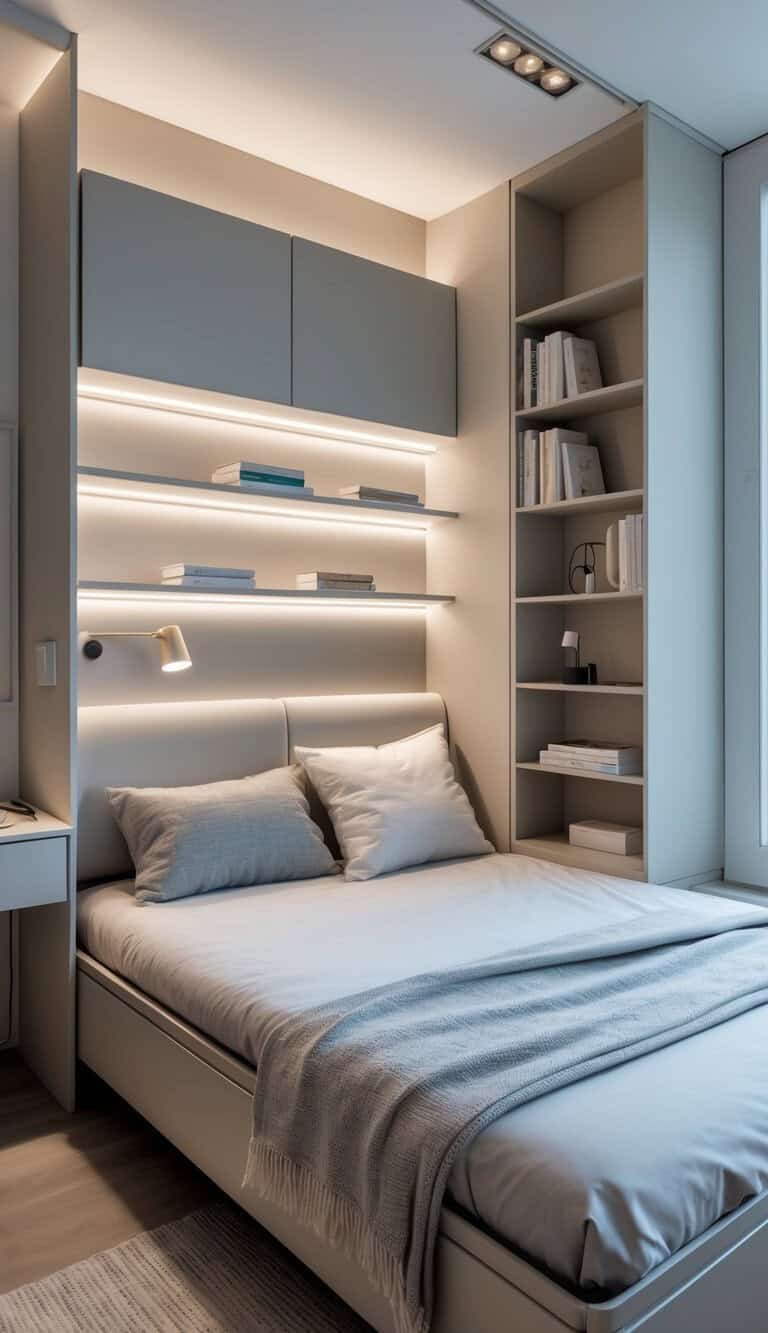
When space is tight, every wall and corner counts. You can add storage in clever ways that keep the room looking neat and stylish, not crowded.
Built-In Storage Solutions
Built-ins are fantastic for small bedrooms. They use the walls, not the floor, so there’s more space to move around.
- Go for built-in wardrobes that go all the way up to the ceiling — great for clothes, bedding, or seasonal stuff. Sliding doors save even more space.
- Custom shelves around the bed — above or beside the headboard — can take the place of nightstands.
- If you’ve got an awkward corner or alcove, a built-in desk or dresser can turn it into something useful.
Multi-Functional Storage
In a small bedroom, smart storage makes all the difference. The goal is to maximize every inch without overcrowding the room.
Choose furniture that works double duty:
- Storage beds with drawers are great for clothes, shoes, or linens. No storage bed? Rolling bins or flat boxes work too!
- A lift-up bed frame is another option for stashing bulky items like extra blankets or luggage.
- A bench with hidden storage at the foot of the bed doubles as seating and a stash spot.
- Nightstands with drawers keep essentials tidy while adding subtle storage space.
- A desk that doubles as a vanity can reduce clutter and free up floor space.
Floating Shelves and Wall Storage
When floor space is limited, your walls become valuable real estate. Using vertical space smartly helps keep the room open and clutter-free.
Here are ideas to make the most of wall storage:
- Floating shelves offer storage without eating up floor space. They’re perfect for displaying books, small plants, framed photos, or baskets for accessories.
- Wall sconces free up your nightstand and create a cleaner look.
- Pegboards or wall organizers keep jewelry, hats, or small essentials within easy reach while adding a bit of personality.
Important to remember though: Keep wall storage balanced. Don’t fill every inch! Mix shelves with art or mirrors for a more open vibe.
Optimizing Lighting for Small Spaces

Good lighting can totally change how a small bedroom feels. The right setup makes the room feel open, cozy, and practical — without adding clutter.
Using Wall-Mounted Sconces
Wall-mounted sconces are a favorite for small bedrooms. They free up nightstand space and put light right where you need it.
- Save surface space: Mounting lights on the wall keeps your nightstands clear for essentials like books, glasses, or a small plant.
- Easy installation: Plug-in sconces are renter-friendly — just mount, plug, and you’re done.
- Adjustable options: Swing-arm sconces let you pull the light closer for reading, then push it away when you’re done. They’re both functional and flexible.
- Design versatility: Available in countless styles — from sleek and modern to soft and classic — sconces can complement any bedroom aesthetic.
Layering Ambient and Task Lighting
One overhead light isn’t enough. Layering ambient light for general brightness with task lighting for reading or working makes a big difference.
Build your light layers with these tips:
- Ambient lighting provides overall brightness. Think a ceiling fixture or flush-mount light to illuminate the full space.
- Task lighting focused light for activities like reading, getting ready, or working. Sconces, desk lamps, or bedside swing-arm lights work well.
- Accent lighting adds warmth and highlights features like artwork or textured walls. Small lamps or LED strips can do the trick.
Choosing Fixtures for Style and Function
Lighting doesn’t have to be boring. Pick fixtures that fit the room’s vibe but still do their job.
- Pendant lights hung at different heights can add interest without taking up floor space.
- Wall sconces save space on nightstands while adding a polished, modern, or vintage touch.
- Slim LED strips along shelves or the headboard are subtle but effective.
Here’s a quick breakdown:
| Fixture Type | Space-Saving Benefit | Style Impact |
|---|---|---|
| Wall sconces | Free up nightstand space | Modern or classic look |
| Pendant lights | No floor footprint | Adds height + drama |
| LED strips | Hidden, flexible placement | Sleek and minimal |
Finding the right balance of style and function keeps the lighting intentional and the room uncluttered.
Decorating Tips for Visual Space and Comfort
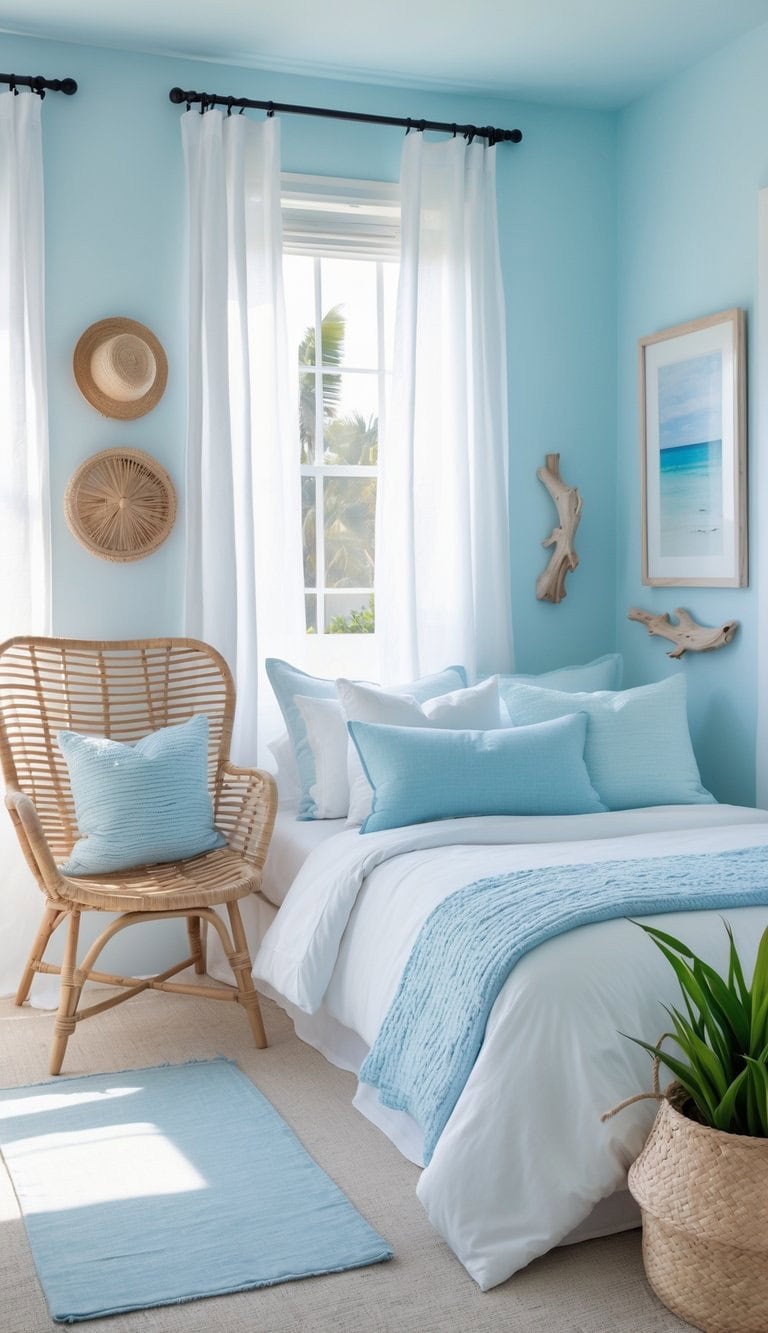
Making a small bedroom feel bigger and more comfortable comes down to smart choices. The colors you pick, how you use light, and the textures you bring in can all help the space feel brighter, cozier, and less cramped.
Choosing the Right Color Scheme
Light colors usually work best when we want a room to feel open. Soft whites, pale grays, and light beige reflect more light and make walls seem farther apart.
If you’re into color, go for muted tones like sage green or dusty blue to add personality without feeling too bold.
Dark colors can work too, but they create a totally different vibe. Deep navy or charcoal might make a small room feel cozy, especially if you’ve got decent lighting.
The trick is to keep the palette simple and avoid mixing too many heavy shades.
Here’s a quick guide:
| Color Type | Effect on Room | Best Use Case |
|---|---|---|
| Light neutrals | Bright, airy | Everyday look |
| Soft pastels | Gentle warmth | Subtle color |
| Dark tones | Cozy, intimate | Relaxing vibe |
Keeping trim, ceilings, and furniture in lighter shades helps balance things out.
Incorporating Mirrors and Reflective Surfaces
Mirrors are one of the easiest ways to make a small bedroom feel bigger.
Place a mirror across from a window. It’ll bounce natural light around and brighten things up fast. Even a medium-sized mirror can make a surprisingly big difference in how open a room feels.
Try a mirrored closet door. It’s both functional and decorative, giving you a full-length view without taking up extra space.
You don’t have to stop at mirrors too!
Glass tabletops or metallic finishes can subtly boost brightness.
Selecting Textiles
Textiles set the mood in a small bedroom. The right fabrics and finishing touches can completely change how a small bedroom feels.
- Lightweight curtains — linen or cotton — let in more light and keep things from feeling heavy.
- Roman shades are a smart pick since they fit snug and don’t hog space.
- Lighter bedding and breathable fabrics help the room feel fresh. Layering a few textures — a knit throw, maybe a quilt — adds comfort without making things crowded.
Personalizing Your Small Bedroom

Making a small bedroom feel like yours is all about the details. Use artwork, accents, and personal touches that reflect who you are. Just keep things uncluttered and easy to switch up.
Adding Art and Decor
Art doesn’t need to be huge to make an impact.
Smaller pieces often work better in tight spaces because they won’t overwhelm the walls.
You can group a few mini prints or photos in a simple grid for a gallery-style look that doesn’t take up much room.
Functional accents can be décor too. A patterned throw blanket, some colorful pillows, or a textured rug can add personality without crowding the place.
If you want to keep surfaces clear, wall-mounted shelves or ledges are great for framed prints, plants, or little sculptures.
Showcasing Your Personality in a Small Space
A small bedroom can still show off your style if you pick items with intention. Instead of filling every corner, focus on a handful of meaningful things that tell your story.
Maybe it’s a favorite travel photo or a handmade quilt — stuff like that makes the room feel personal.
A guitar on a wall hook, a neat hat collection, or a tidy stack of books on a floating shelf all show personality and keep things practical.
Color’s another way to bring in your character. Even if the walls are neutral, your bedding, lampshades, or art in your favorite shades can tie things together.
Refreshing the Look Seasonally
You don’t need a full makeover to keep a small bedroom feeling new. A few thoughtful swaps throughout the year can refresh the space and keep it interesting.
- Spring and summer are perfect for light cotton sheets and bright pillow covers.
- Fall and winter call for heavier, cozier fabrics and deeper tones.
You can also rotate smaller accents.
- Trade out throw blankets, rugs, or wall art with the seasons.
- Store a few favorites and bring them back at different times of year for easy variety.
Even plants can change with the seasons.
- Fresh flowers for spring
- Leafy greens for summer
- Dried arrangements for fall
- Frosty leafless branches for winter
Small updates like these give your bedroom a new feel without much effort.